TESDA, or the Technical Education and Skills Development Authority, is a Philippine government agency that handles technical and vocational education and training, also known as tech-voc education. It helps Filipinos learn practical skills, get certified, and prepare for real jobs through training programs, assessments, and national certificates recognized by employers so they can find work, start small businesses, or improve their careers in different industries.
As an agency, TESDA supports students, jobseekers, workers, and career shifters who want hands-on training in the fields of construction, tourism, IT, health services, manufacturing, agriculture, and many others. It sets training standards, registers tech-voc schools, runs scholarship programs, and issues certificates like National Certificates (NC) that show a person is skilled and ready for real jobs—locally or abroad.
What is TESDA? Background and Overview
TESDA was created through Republic Act No. 7796, also called the Technical Education and Skills Development Act of 1994, which was signed into law on August 25, 1994, by President Fidel V. Ramos. It was formed by merging three government bodies:
- National Manpower and Youth Council (NMYC)
- Bureau of Technical and Vocational Education (BTVE) of DECS
- Apprenticeship Program of the Bureau of Local Employment (BLE-DOLE)
This merger reduced overlapping programs and gave the country one clear direction for tech-voc education and skills training. It also aligns training with industry needs, so learners gain actual skills that match real job requirements, which helps reduce job-skills mismatch and gives workers clearer pathways to employment or livelihood.
Mandate
As the government agency responsible for managing and supervising technical education and skills development in the Philippines, its main responsibilities include:
- Coordinating and monitoring skills training programs nationwide
- Setting and approving skills and competency standards
- Assessing and certifying workers
- Registering and accrediting technical-vocational schools
- Managing training funds and scholarships
- Supporting trainers and training centers
- Working with industries, LGUs, and training institutions to improve workforce readiness
Vision
The transformational leader in the technical education and skills development of the Filipino workforce.
Mission
TESDA sets direction, issues standards, and runs programs geared towards a quality-assured and inclusive technical education and skills development and certification system.
Values
TESDA believes in:
- Demonstrated competence
- Institutional integrity
- Personal commitment
- Culture of innovativeness
- Deep sense of nationalism
Quality Policy
“We measure our worth by the satisfaction of the customers we serve.”
TESDA commits to improving its systems through effectiveness, responsiveness, integrity, efficiency, and citizen focus.
Logo
The TESDA logo symbolizes skills development, lifelong learning, and national progress through technical education. It reflects TESDA’s focus on hands-on training, worker competence, and readiness for real jobs.
How TESDA Works: Core Functions
TESDA’s work revolves around three major areas:
1. Direction Setting
TESDA prepares national skills plans like the National Technical Education and Skills Development Plan (NTESDP). These plans guide training priorities based on labor market data, research, and industry needs, by focusing on:
- Lifelong learning
- Skills upgrading and reskilling
- Industry-driven training
- Enterprise-based programs
- Recognition of skills gained outside formal education
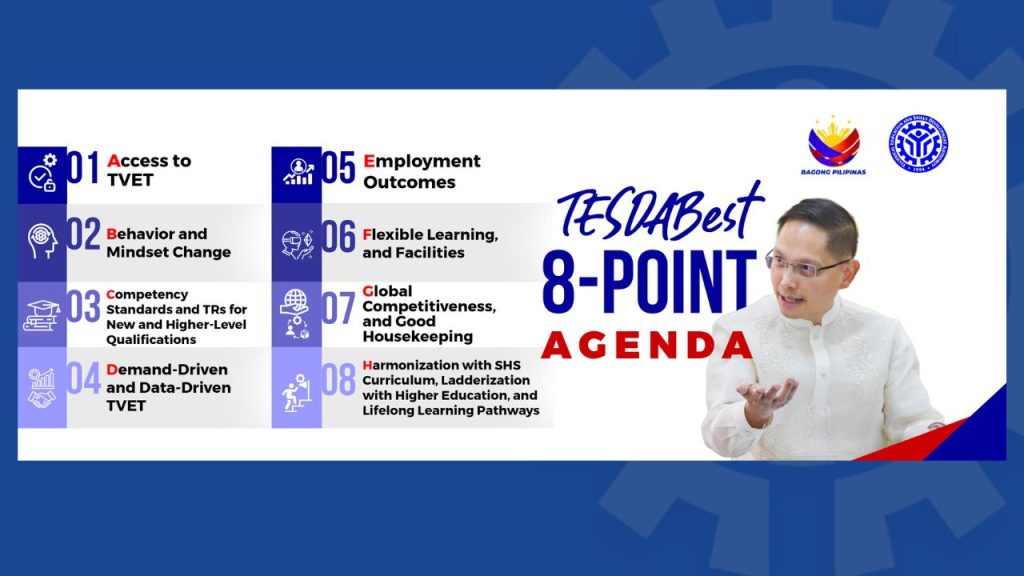
It is particularly focused in the following priority sectors:
- Agriculture
- Manufacturing
- Tourism
- ICT and IT-BPM
- Construction
- Health
- Transportation and Logistics
- Energy
- Creative Industries
- Education
2. Standards Setting and Systems Development
TESDA develops:
- Training Regulations (TRs)
- Competency Standards
- Assessment and Certification Systems
- Philippine TVET Qualifications Framework
These standards help schools train learners properly and help employers trust TESDA certificates.
3. Support to TVET Provision
TESDA runs and supports training through:
- 57 TESDA-administered schools
- 60 training centers
- Community-based training with LGUs
- Enterprise-based training like apprenticeships
Programs and Services Offered
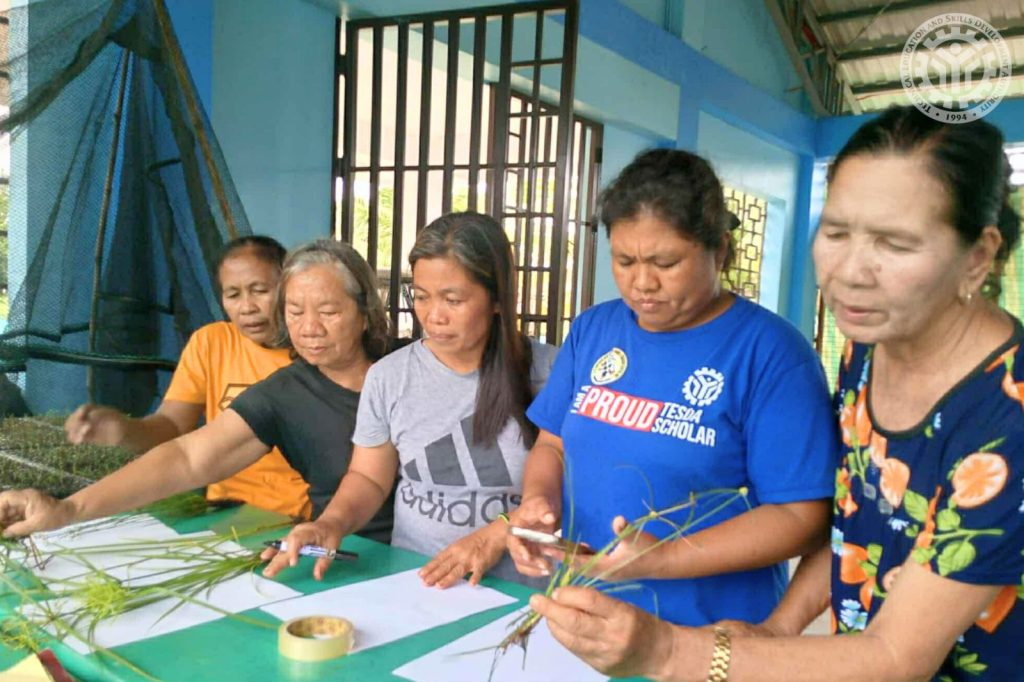
TESDA offers skills training, certification, and job-ready support for Filipinos through these programs and services:
Training Programs
- School-Based Training
- Center-Based Training
- Community-Based Training
- Enterprise-Based Training (Apprenticeship, Learnership, Dual Training System)
Scholarships and Financial Support
- Training for Work Scholarship Program (TWSP)
- Private Education Student Financial Assistance (PESFA)
- Special Training Programs for LGUs, OFWs, women, youth, PWDs, and displaced workers
Assessment and Certification
- National Certificate (NC I–IV)
- Certificate of Competency (COC)
- Competency Assessment and Skills Recognition
Program Registration and Quality Assurance
- Unified TVET Program Registration and Accreditation System (UTPRAS)
- Certificate of Program Registration (CoPR)
- Compliance audit and monitoring of training institutions
Specialized Training Services
- TESDA Women’s Center
- Language Skills Institutes
- Korea–Philippines IT Training Centers
- Mobile Training Programs
Industry and Employment Support
- Industry Board and Sectoral Partnerships
- Enterprise-Based Training Programs
- Skills mapping and labor market alignment
Planning and Standards Development
- Training Regulations (TRs)
- Competency Standards
- National Technical Education and Skills Development Plan (NTESDP)
Learner and Public Support Services
- Career guidance and skills counseling
- Registry of Certified Workers
- Online and walk-in inquiry services
TESDA Scholarships and Support Services
TESDA also provides:
- Free and scholarship-supported training
- Career guidance and job matching
- Entrepreneurship and livelihood training
- Trainers’ training and institutional support
These services help learners complete training and transition to work or self-employment.
Training Modalities
The programs are offered through either of these four delivery modes:
- School-based
- Center-based
- Community-based
- Enterprise-based (apprenticeship, dual training)
This flexible setup helps reach learners in cities, provinces, and remote areas.
TESDA Assessment and Certification
After training, learners can apply for competency assessment. If they meet the required standards, they receive:
- National Certificate (NC) or
- Certificate of Competency (COC)
TESDA keeps a Registry of Certified Workers, which employers can check to verify skills and qualifications.
Benefits
TESDA offers benefits that make its name synonymous to:
- Affordable education options
- Short-term, practical training
- Proof of skills for employment
- Training aligned with industry needs
It was designed so Filipinos can get accessible training, national certification, and industry-based programs that connect skills to jobs much more easily.
Who Should Consider TESDA?
TESDA is ideal for:
- Students who prefer hands-on learning
- Jobseekers needing quick, practical skills
- Workers upgrading or changing careers
- OFW aspirants needing certification
- Small business starters
TESDA training also often costs less and takes less time than college programs.
How to Get Started
To avail of the benefits offered by the TESDA through its programs and services, you may follow these steps:
Step 1. Decide what skill or job you want
Step 2. Look for a TESDA-registered course or training center
Step 3. Apply for training or a scholarship
Step 4. Complete the training
Step 5. Take the competency assessment
Step 6. Get your National Certificate
Step 7. Use it for work, promotion, or business
Another option would be to go through the training online as offered by the agency via the TESDA Online Programs (TOP).
Contact Details
For inquiries and other concerns, you may reach out to TESDA via the contact information for the TESDA Head Office:
- Hotline: 8887-7777
- Email: contactcenter@tesda.gov.ph
- Facebook: TESDA
- Twitter/X: @TESDAOfficial
- Text (inquiries): 0917-479-4370
- Employment survey: 0954-239-3492
Remember: If you want skills that lead directly to work, TESDA is one of the most accessible education pathways in the Philippines.
Video: TESDA @ 29
Learn more about how TESDA has helped countless Filipinos through the years by watching this video below: